

The email you never got around to writing earns nothing. That is the whole problem with restaurant email marketing, and it is a blank page problem, not a strategy problem.
Targeted, automated emails drive 16x more revenue per email sent than mass sends, according to the 2026 DoorDash and SevenRooms Restaurant Trends Report. That gap only pays once something is written and sent.
So here are eight restaurant email marketing templates you can copy and paste today. Each one gives you the subject line, the preview text, the body and the call to action, with the guest data it depends on named underneath.
They are written to work in any sending tool. They are easier to fill in when your guest profiles already hold birthdays, last-visit dates and seating preferences, which is what restaurant email marketing software is for.
What emails should a restaurant send
Eight, and each one does a different job. The templates below follow the guest from the moment they join your list to the moment they stop coming back.
- Welcome email. Sets expectations and collects the data every other send needs.
- Newsletter. Keeps you in front of people between visits.
- Special announcement. Openings, chef's tables, menu launches.
- Food and drink update. Sells a specific dish or drink on a deadline.
- Personalised offer. Birthdays, anniversaries and other occasions worth booking.
- Event promotion. Fills a dated, capped, paid room.
- Post-visit follow-up. Catches a problem before it becomes a public review.
- Win back. Reaches guests who have gone quiet.
Booking confirmations are the ninth email most restaurants send, and they are covered separately in restaurant reservation confirmation email tips.
1. Welcome email, the one that pays for all the others
The welcome email is the only send a guest is expecting, which is why it earns the highest open rate you will ever see. Thank them for joining, then say what they signed up for and what they will not get. A subscriber who knows the deal stays subscribed.
Give them two things they would only know from a regular. When the kitchen is at its best, and the dish that sells out before nine. Close by asking for a birthday and a dietary note. That is the data every other email on this list spends.
Make it your own
Send it within an hour of sign-up, while the reason they joined is still fresh. Ask for two pieces of information, not six. Birthdays, anniversaries and dietary notes earn their place because you will use them. Store what you collect on the guest profile in your restaurant CRM rather than a spreadsheet, so the personalized offer, follow-up and win back emails later in this list have something to work from.
2. Email newsletters: keep customers in the know
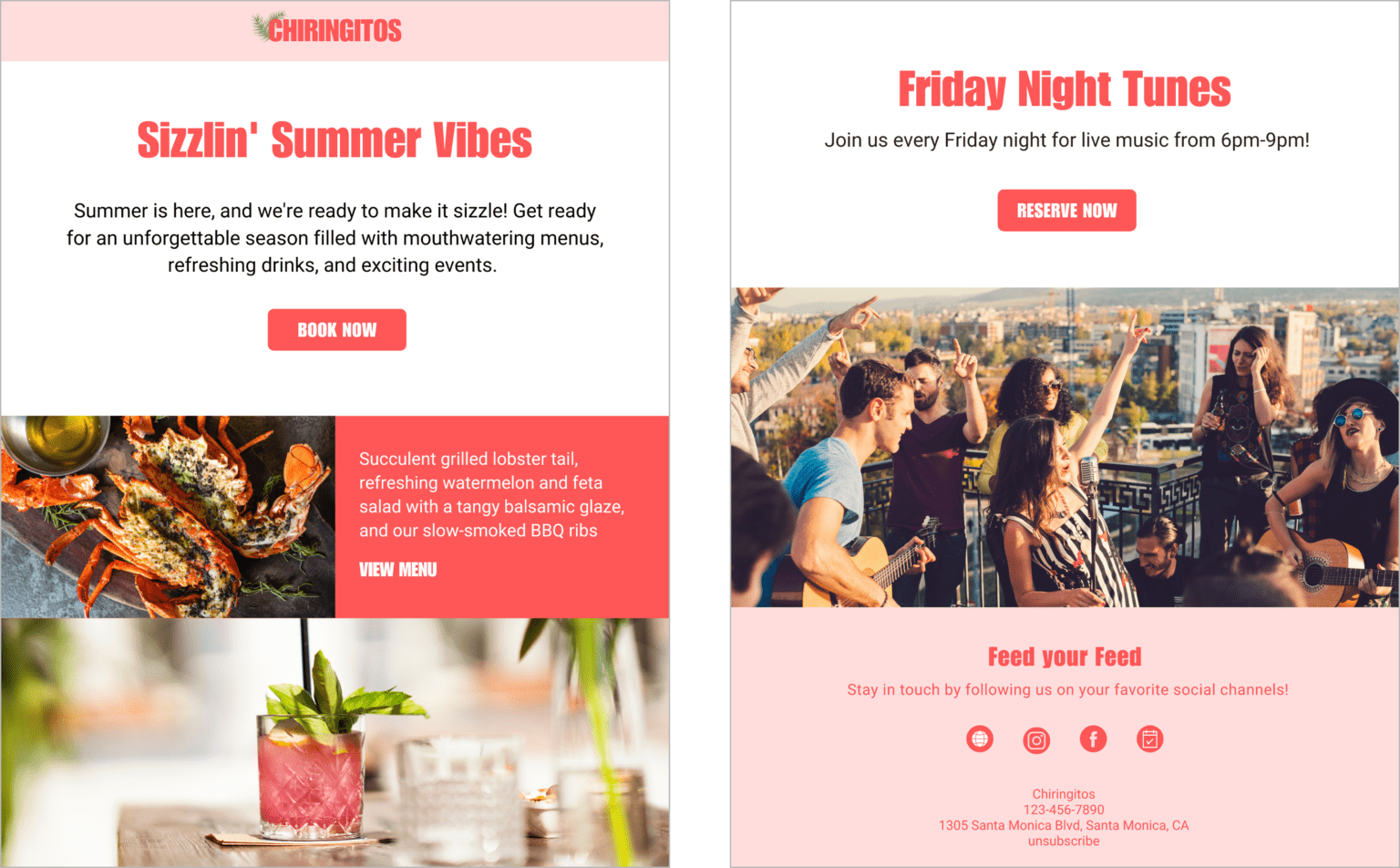
Clue in customers with a timely restaurant newsletter. In the template below, the restaurant introduces seasonal summer items and events using a playful color scheme.
They also use summer language like “refreshing” and “sizzling” to continue the seasonal fun. Three bold CTAs — “Book Now,” “View Menu” and “Reserve Now” — provide ample opportunity to secure a booking, and the social profile links help the restaurant build a cross-channel following.
Make it your own
Use each text block to update subscribers on exciting happenings at your restaurant and add enticing visuals to keep them scrolling. Incorporate your branding and use food, drink and guest imagery to complement each section.
Here are some email newsletter ideas:
- Menu announcements
- Live music nights
- Upcoming events
- Blog post snippets
- Promotions and deals
- Guest feedback
- Frequently asked questions
- Reward program details
Research from Campaign Monitor recommends sending email newsletters at least once a month but no more than twice per week. Just ensure you have worthy news to share to avoid unsubscribes.
As you can see, it takes just a few simple tweaks to make this template your own, which makes creating — and sustaining — a restaurant email marketing strategy realistic and easy.
3. Special announcements: build buzz with a sleek send
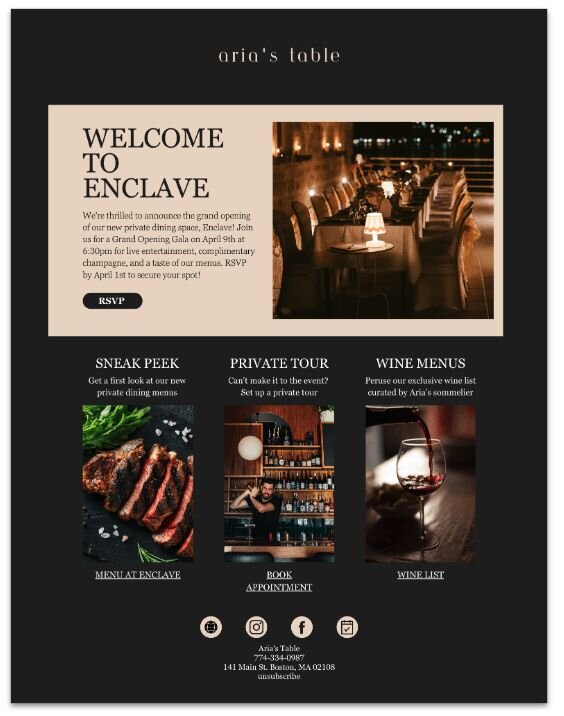
In this example, the sleek and elegant template serves a dual purpose — it’s a welcome email and a grand opening announcement. You’ll notice the restaurant included key details like the date and time and a distinct RSVP button to attract new customers and repeat guests.
They wrap it up with icons that lead to their social media accounts and a display of their address and phone number.
Make it your own
Use this template to announce grand openings, chef’s table events, prix fixe menus, live entertainment, sneak peeks and other special events throughout the year. The sophisticated email design will grab your subscribers’ attention and build excitement.
Keep the content skimmable — include fundamental details, but don’t overwhelm with more than a few sentences per block.
Remember, special announcements lose their luster if you send them too often. Unless you have weekly events, send sparingly — no more than a few times per month — to keep interest piqued and engagement high.
4. Food & drink updates: deliver deals and updates
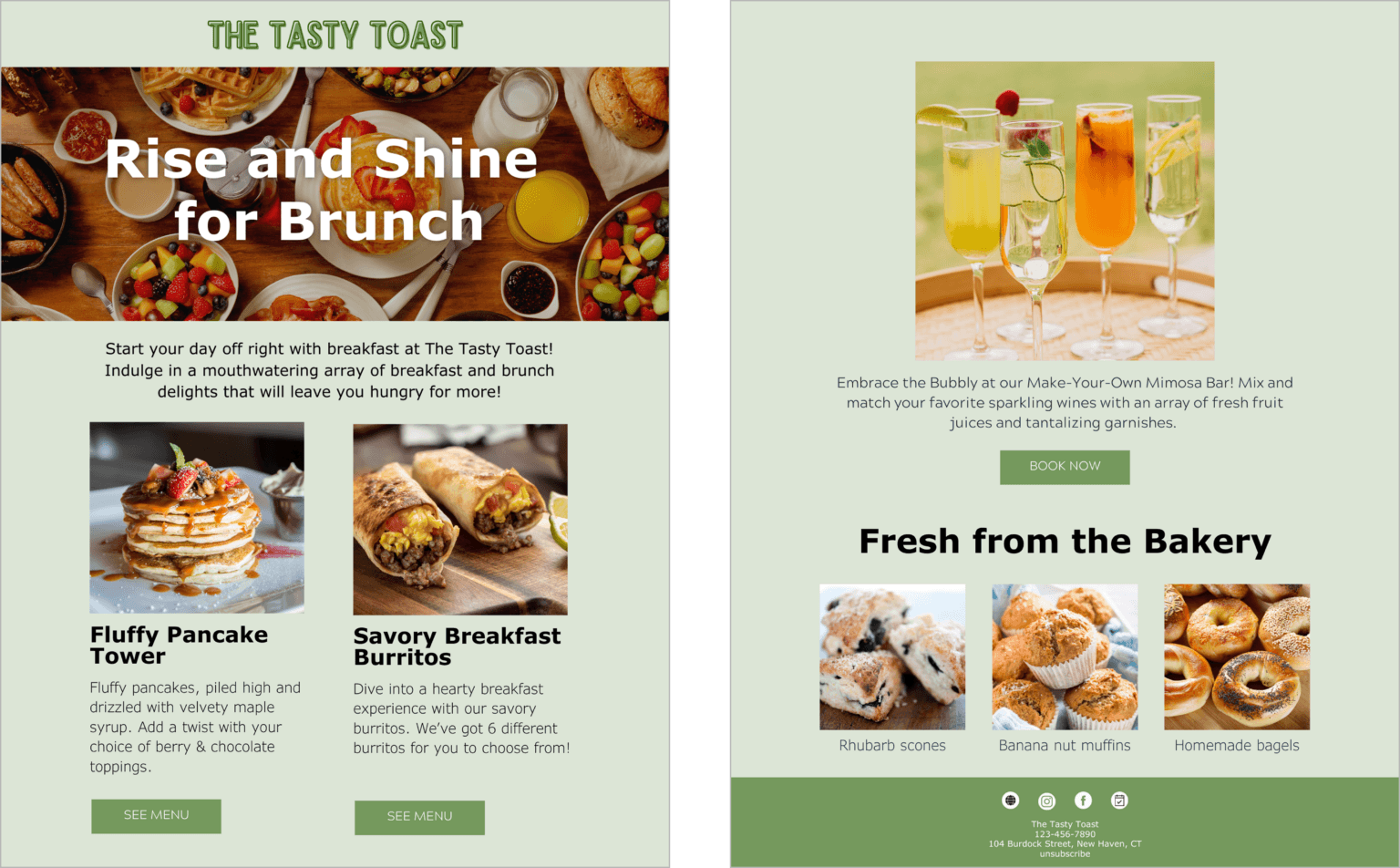
An image-forward email can draw guests in by tempting them with offerings from your restaurant. In the template below, the focus is on the imagery — and rightfully so.
Photos of pancakes, burritos, bagels and mimosas greet subscribers upon opening, and language like “velvety,” “drizzled,” “savory” and “tantalizing” make for a mouth-watering combo. Add a catchy title and compelling offer, and you’ve got a sure-fire recipe for success.
Make it your own
Images will be crucial when using this template. High-quality food and drink photos help secure reservations and impromptu visits.
Descriptive language is also a must. Turn a simple mimosa into an “effervescent glass of sparkling wine with a selection of fresh fruit purees” and a standard burger into a “juicy all-beef patty on a handmade pretzel roll.”
Top it all off with CTAs that drive the subscriber to action and link your social profiles to gain followers.
How often you send food and drink emails depends on your target audience and overall strategy (consider the other emails you have in your queue, as well). Mix up the emails you send — think happy hour specials, holiday brunch offerings and dinner promotions — to keep guests interested.
Use guest data to send tailored emails you know will induce cravings and spark action. Invite a bubbly-loving big spender to celebrate their birthday with a complimentary champagne toast or entice a margarita fan to check out your new Taco Tuesday promotion.
5. Personalized offers: customize content that wows guests
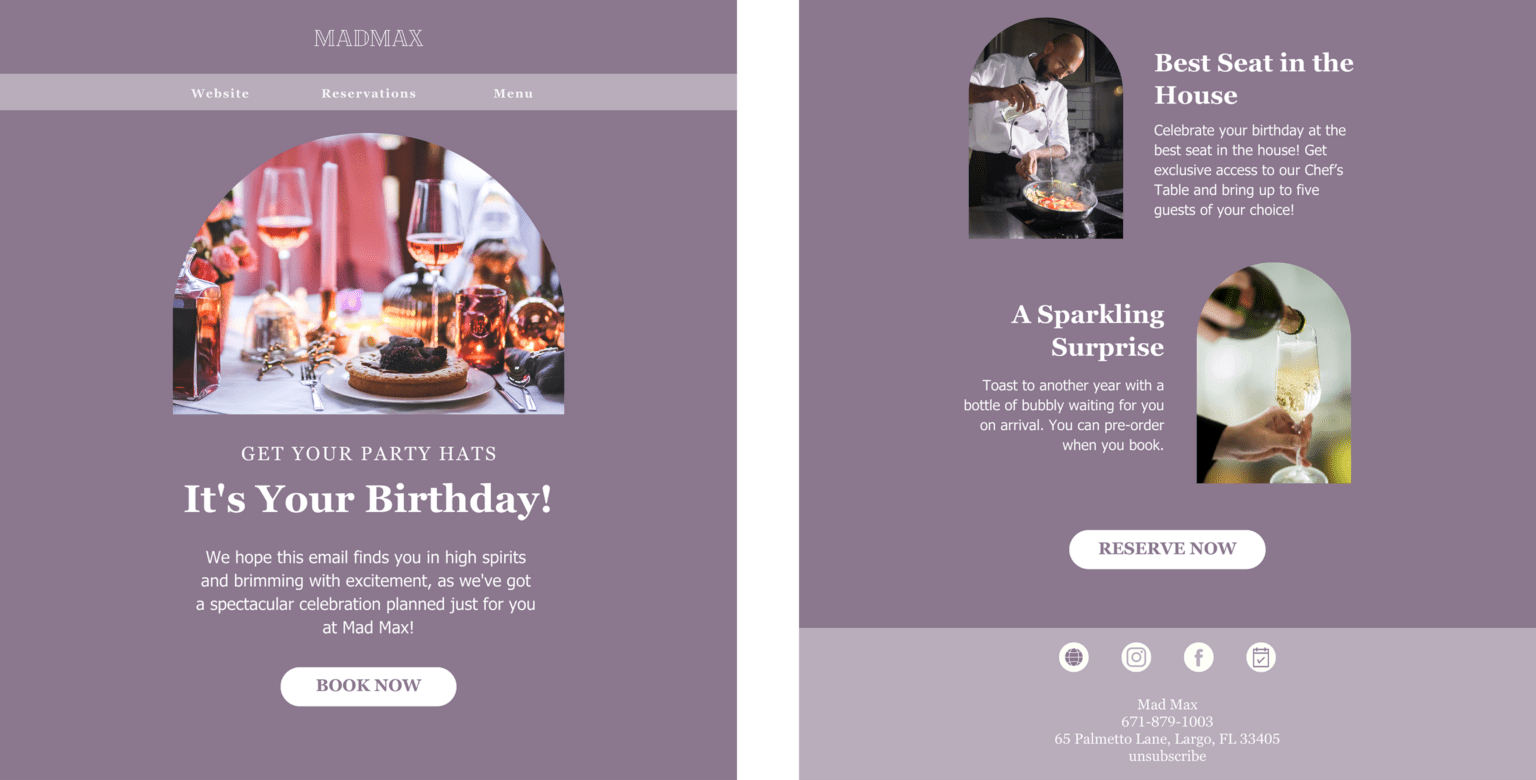
Cue the confetti — this festive template lets you celebrate guests with personalized offers that up the wow factor. In this example, the guest receives a personalized birthday greeting, an offer for the best table in the house and a champagne toast.
The navigation at the top provides easy access to the restaurant’s website, menu and reservations system, ensuring the subscriber can easily take advantage of anything you offer them.
Make it your own
Send birthday, anniversary and other celebratory invites to turn one-time guests into loyal customers. Again, guest data is crucial here — collect birth and anniversary dates so you can thrill guests with personalized offers and customized greetings at the exact moment they feel like celebrating.
Use festive imagery featuring champagne, happy guests and desserts as well as descriptive language like “cheers,” “toast” and “pop” to create a celebratory vibe.
Customize the top navigation to direct subscribers to the most relevant and important links, like landing pages, your website, reservations, menus, promotional offers and more.
Train managers and servers to ask for email addresses when taking reservations or handling walk-ins to build your restaurant email list quickly. Follow up with a welcome email that explains your guest loyalty program and a form to input birthdays and other milestones.
6. Event promotions: get the party started with a modern design
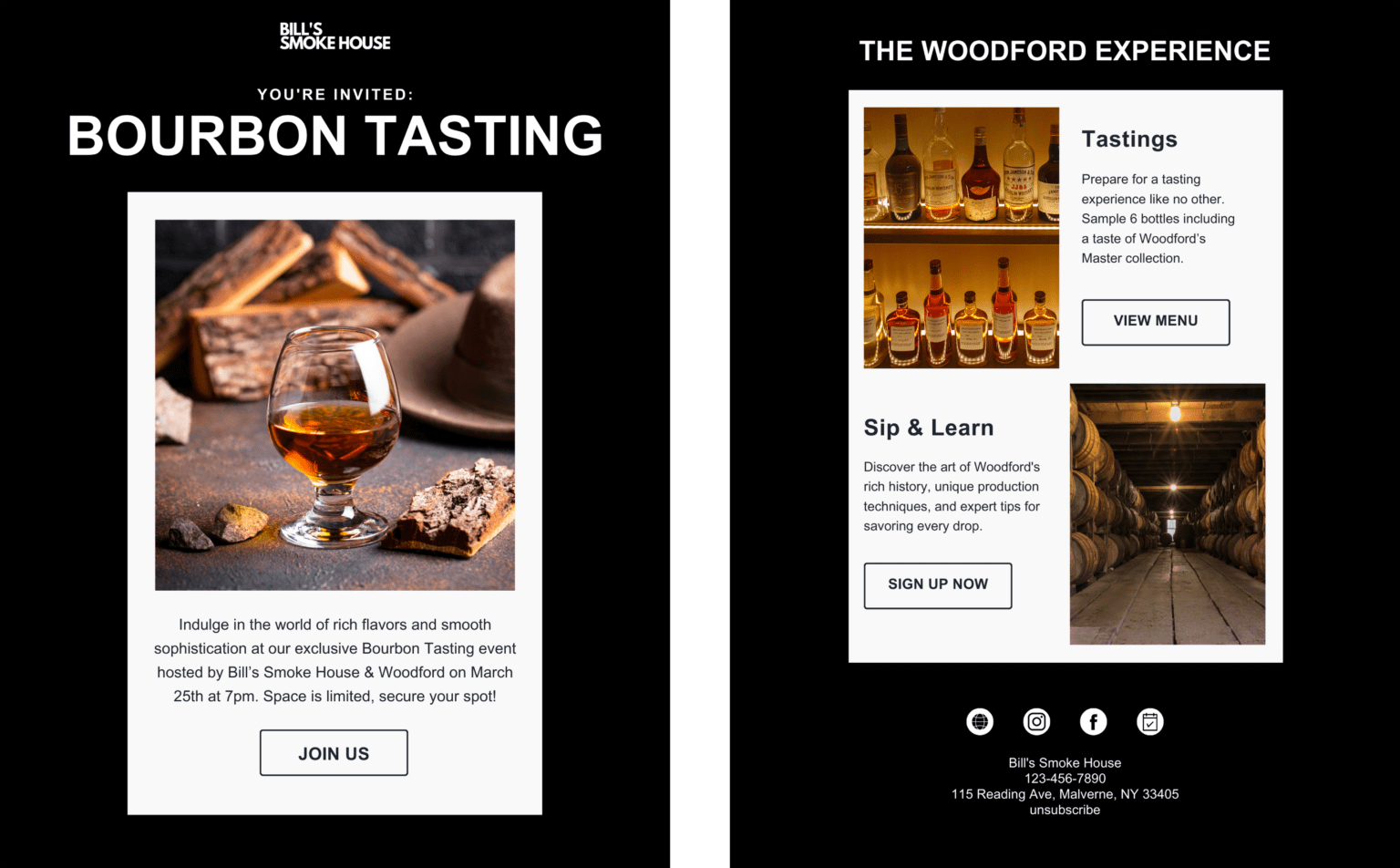
In this template, the restaurant used simple but effective imagery, titles and copy to grab attention and get sign-ups.
All three text blocks promote the event, but each one contains concise, unique details, like the date and time, the bottles guests will sample and what they’ll learn if they attend.
The cherry on top? CTAs that convey urgency and encourage an immediate RVSP.
Make It Your Own
Use this template to announce wine and spirit tastings, holiday parties, cooking classes, guest chefs, wine and paint parties, exclusive dinners and more. Update restaurant branding elements, like your brand’s color palette, logo and visuals to make this template your own.
Include key information like the event title, date, time, menu items and pricing; leaving these details out can frustrate subscribers and make for a bad experience.
Capitalize on the fear of missing out (FOMO) with language that encourages RSVPs and sign-ups — think “limited time,” “selling fast” and “don’t miss out.” Keep the copy short, simple and straightforward — less is more when it comes to marketing emails.
If advanced booking and pre-payments are what you’re after, ensure you have a way to collect online payments before sending this type of marketing email. SevenRooms makes enabling popular online payment easy. (By the way, our data shows that reservations with a prepayment attached spend over 35% more per guest than those without it.)
7. Post-visit follow-up email, the one that catches a problem early
A guest who had a bad night will tell somebody. This send decides whether that somebody is you or Google. Open by naming the date they came in and the dish they ordered. That detail is what makes it read as a note rather than a survey request.
Ask two questions, food and service, and say who the answers go to. Naming a manager turns a form into a conversation. Then invite the complaint directly. A guest who has been told where to put it usually puts it there.
Make it your own
Send it the morning after, not a week later. Detail fades fast and so does the goodwill that makes someone answer. Two questions is the limit. Every extra field costs you responses, and a survey nobody finishes tells you nothing.
Route the replies somewhere a person reads them. Feedback that lands in a shared inbox gets read late, which is why it belongs in restaurant reputation management software alongside your public reviews.
8. Win back email, the one that reaches guests who stopped coming
Most restaurants send to the people who already come in. The list is full of people who used to, and nobody is writing to them. Lead with the gap itself, counted in months. Naming it is less awkward than pretending the last year did not happen.
Give two concrete reasons to come back. A new chef, a changed menu or a room that looks different beats any adjective. Add a dated offer, then name the dish they used to order. That last detail is the difference between a note and a blast.
Make it your own
Define lapsed by your own rhythm. Ninety days is right for a neighborhood restaurant and far too soon for a special-occasion room. The last line needs a last-visit date and an order history on the guest profile. Without those you are sending a generic discount to strangers you already know.
Groot Hospitality tags guests automatically in SevenRooms and runs separate campaigns for first-time diners, repeat guests and the ones who have gone quiet.
Email Marketing Best Practices
When emails are professional, personalized and engaging, they perform better. Follow these best practices to get the most out of your email marketing campaigns. For even more tips, download our Restaurant Email Marketing Guide below.
- Use guest data: Knowing who your guests are is essential. Guest data allows you to target your emails based on guests’ preferences and behaviors, improving click-through rates and increasing customer loyalty.
- Keep subject lines concise: Aim for 20 to 40 characters and front-load the most vital information to boost your open rate. Examples: “$5 wine by the glass — sip and save 🍷” and “Exclusive chef’s table event — RSVP now.”
- Include preview text: If your subject line intrigues them, your preview text will seal the deal. Use this section to elaborate on your subject line but limit the length to 40 to140 characters.
- Write compelling copy: Keep it short and sweet so you don’t lose your subscribers’ attention. Personalize the copy, use actionable language, stick to second person, state the benefit and use your brand’s voice.
- Take high-quality images: Blurry, pixelated and poor-quality images don’t inspire confidence. Hire a professional photographer or use a high-quality stock site.
- End with a strong CTA: Wrap up your email with at least one bold call to action (CTA) like “book a reservation now,” “view the menu,” “place an order” or “learn more.”
Email marketing made simple
Every restaurant marketing strategy should include email. After all, it lets you communicate with your target audience in a direct and personal way. Even better? The ROI of email marketing is unlike any other. According to Litmus, for every dollar spent, email marketing returns $36.
Still not sold? Mango’s Tropical Café increased their revenue by $44,000 in seven months after implementing SevenRooms’ email marketing solution, enabling them to segment their audience and send targeted offers and trigger-based emails.
With SevenRooms’ easy-to-modify restaurant email marketing templates, you, too, can queue up emails in minutes. Our Email Marketing and Marketing Automation solutions let you send everything from promotional emails to event invites.
Book a demo to learn more about how SevenRooms’ customer relationship management software can capture guest data to personalize and elevate your email marketing efforts today.
Restaurant email marketing FAQs
How can restaurants use email marketing?
To share promotions, new menu items, announcements and events, and to reach guests who have stopped coming in. Segmented emails sent on what a guest actually ordered outperform mass sends by a wide margin.
How do I create a restaurant email list?
Collect addresses through your website, reservation flow, social channels, in-venue sign-ups and online orders, always with permission. There is a full method in how to build a restaurant email list.
How often should a restaurant send marketing emails?
Once a month covers the newsletter for most venues. Event, birthday and win-back emails sit outside that rhythm because they are triggered by a date rather than a schedule.
